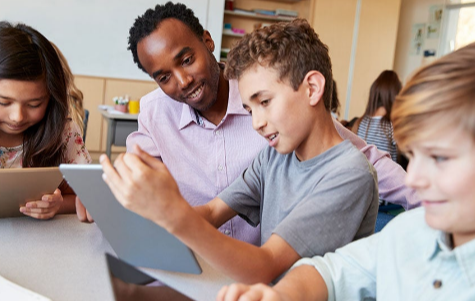
Teachers today leverage technology in innovative ways to foster student engagement. By integrating interactive tools and gamified learning, they create immersive environments that encourage ownership of education. Personalized learning experiences cater to individual needs, while collaboration tools promote teamwork and communication skills. This multifaceted approach prepares students for future careers. However, the effectiveness of these methods raises questions about the underlying principles that guide their implementation. What truly makes technology a transformative force in education?
Integrating Interactive Tools in the Classroom
In modern education, a significant number of teachers are harnessing interactive tools to enhance student engagement and learning outcomes.
Gamified learning techniques motivate students through game-like elements, fostering a sense of achievement.
Additionally, virtual reality immerses learners in dynamic environments, making abstract concepts tangible.
These innovative approaches not only enhance understanding but also empower students to take ownership of their educational experiences, ultimately promoting freedom in learning.
Personalizing Learning Experiences
While traditional education often adopts a one-size-fits-all approach, personalizing learning experiences has emerged as a transformative strategy that tailors instruction to meet individual student needs.
Read Also: How Social Media Technology Influences Us
Enhancing Collaboration Among Students
Although technology has transformed many aspects of education, enhancing collaboration among students remains a critical focus for educators.
Innovative tools facilitate peer feedback and streamline group projects, allowing diverse voices to contribute meaningfully. By using platforms that encourage real-time communication and shared resources, educators empower students to engage actively, fostering a collaborative spirit that transcends traditional learning environments and nurtures collective problem-solving skills.
Preparing Students for Future Careers
Effective collaboration among students not only enhances their learning experiences but also equips them with vital skills for the future workforce.
Conclusion
In conclusion, by embracing technology, educators are not just keeping up with the times but are also paving the way for a transformative educational experience. The integration of interactive tools, personalized learning, and enhanced collaboration equips students with critical skills for their future careers. As the saying goes, “the sky’s the limit,” and with these innovative approaches, teachers are ensuring that students reach their full potential, fostering a dynamic environment where learning knows no bounds.